2026 Zen Workbook: A Strategic Framework for Intentional Planning and Calm Productivity
In an era defined by information overload and constant digital interruption, the ability to maintain focus is not merely a soft skill; it is a critical competitive advantage. The 2026 Zen Workbook addresses this necessity by offering more than just a schedule; it provides a structured methodology for aligning daily actions with long-term strategic objectives. For entrepreneurs, creators, and decision-makers aged 20 to 50, the challenge is rarely a lack of ideas or ambition, but rather the fragmentation of attention that prevents deep work and meaningful execution.
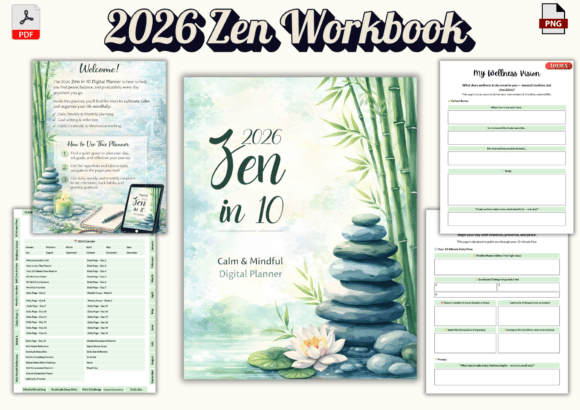
This digital planner system is designed to bridge the gap between high-level vision and tactical reality. By integrating mindfulness principles with rigorous planning structures, the 2026 Zen in 10 Planner creates a calm, focused environment where complex problems can be deconstructed into manageable steps. It serves as a neutral ground for your mind, allowing you to transition from reactive mode to proactive strategy without the friction of disorganization.
The Strategic Value of Mindful Digital Planning
Traditional productivity tools often exacerbate stress by emphasizing volume over value. They encourage users to fill every minute with tasks, leading to burnout and diminishing returns. The 2026 Zen Workbook operates on a different premise: that clarity precedes efficiency. The inclusion of reflection journaling sections and self-care mindfulness check-ins is not an afterthought; it is a core component of a sustainable operational system.
When used strategically, this planner allows professionals to audit their mental bandwidth before committing to new projects. The 160-page structure, divided into daily, weekly, and monthly layouts, forces a hierarchy of importance. You are compelled to ask not just "what needs to be done," but "what must be done to move the needle." This distinction is vital for small business owners and freelancers who wear multiple hats. Without the discipline of a structured review process, marketing efforts, product development, and customer service often compete for the same cognitive resources, resulting in mediocrity across all fronts.
The digital nature of the planner—available in PNG and PDF formats compatible with GoodNotes, Notability, and Xodo—ensures that your strategy travels with you. Whether you are sketching out a brand positioning map on a tablet during a commute or reviewing quarterly goals at a coffee shop, the 2026 Zen in 10 Planner remains accessible. However, accessibility alone does not guarantee success; the true power lies in the intentional application of its features.
Aligning Goals with Daily Execution
One of the most significant risks in professional life is the "activity trap," where busyness is mistaken for progress. The habit goal tracking pages within the workbook serve as a corrective mechanism. They require you to define specific behaviors that lead to desired outcomes, rather than simply listing abstract targets. For instance, instead of a vague goal like "grow the audience," the tracker encourages you to log the specific actions required: "draft three blog posts," "engage with five industry leaders," or "analyze last week's engagement metrics."
This granular approach supports better decision-making. When you review your completed pages, you are not just looking at a checklist; you are analyzing patterns in your workflow. Are you consistently neglecting creative work because administrative tasks are consuming your peak energy hours? The visual layout of the planner makes these imbalances immediately apparent. Recognizing these patterns allows you to adjust your schedule proactively, ensuring that your most valuable time is reserved for high-impact activities.
Implementing the System: Practical Applications
To derive maximum value from the 2026 Zen Workbook, one must approach it as a living document rather than a static form. The clean margins and no-bleed design (8.3 x 11.7 inches A4) facilitate both digital annotation and printing, offering flexibility for those who prefer tactile feedback alongside digital convenience. Here is how various professionals can leverage this tool to enhance their operations.
- Entrepreneurs and Small Business Owners: Use the monthly planning pages to set strategic themes rather than just KPIs. Dedicate the first page of each month to a "Mindset Check-in" using the reflection sections. Ask yourself: What is the primary obstacle to growth this month? How will I ensure my team and personal well-being remain aligned while addressing it? This practice prevents the tunnel vision that often leads to poor hiring decisions or rushed product launches.
- Creatives and Content Creators: The journaling sections are invaluable for overcoming creative blocks. Instead of staring at a blank canvas, use the prompt-based reflections to explore new angles for your content. Track your creative output habits alongside your administrative tasks. If you notice a drop in writing consistency, the planner helps you identify if it is a scheduling issue or a need for restorative downtime.
- Professionals and Educators: For those managing complex schedules, the weekly overview acts as a command center. Prioritize your week based on impact, not urgency. Use the habit tracking to build routines that support learning and development, such as dedicating 30 minutes daily to reading industry news or practicing a new skill. This ensures continuous improvement even amidst a demanding workload.
The Role of Reflection in Long-Term Results
Many planning systems fail because they lack a feedback loop. The 2026 Zen in 10 Planner explicitly includes space for reflection, which is essential for iterative improvement. After completing a project or a month of work, the dedicated review pages allow you to assess what worked and what did not. This process transforms experience into wisdom.
Consider the concept of "strategic patience." In a fast-paced digital economy, there is immense pressure to pivot quickly. However, the 2026 Zen Workbook encourages a measured approach. By documenting your thoughts and progress over time, you create a historical record of your journey. This record helps you distinguish between temporary setbacks and fundamental flaws in your strategy. It prevents the emotional reaction of abandoning a viable plan due to short-term noise.
Risks of Unintentional Usage
While the 2026 Zen Workbook is a powerful tool, it is not a magic solution. Relying on the planner without clear goals or context can lead to a false sense of security. The danger lies in treating the act of planning as the work itself. Filling out pages with perfect calligraphy or meticulously checking off trivial tasks can become a form of procrastination, known as "productive procrastination."
If you use the planner solely to organize chaos without addressing the root causes of that chaos, you will remain overwhelmed. The structure cannot fix a broken strategy. For example, if your business model is unsustainable, no amount of daily scheduling will make it profitable. Similarly, if you lack the discipline to follow through on the plans you write down, the planner becomes a source of guilt rather than empowerment.
Furthermore, the digital format requires a certain level of technical comfort. While the files are user-friendly, relying entirely on technology can sometimes disconnect you from the physical reality of your work. Some users find that printing specific pages to annotate with pen offers a deeper cognitive connection to the material. The key is to adapt the tool to your workflow, not force your workflow to fit the tool.
Making Better Decisions Through Structure
The ultimate goal of the 2026 Zen in 10 Planner is to free up cognitive load so you can focus on high-value decision-making. When your schedule, habits, and goals are externalized onto a page (or screen), your brain is relieved of the burden of remembering everything. This reduction in mental clutter allows for sharper thinking and more innovative problem-solving.
By adopting a "zen" approach to planning, you accept that not everything can be controlled. The planner helps you manage what is within your sphere of influence while acknowledging external variables. This mindset shift is crucial for resilience. When unexpected challenges arise, you do not panic; you refer to your plan, adjust the necessary elements, and move forward with confidence.
For the modern professional, the 2026 Zen Workbook represents a return to intentionality. It is a reminder that productivity is not about doing more things faster, but about doing the right things with clarity and purpose. Whether you are building a brand, managing a team, or simply seeking a more balanced life, this digital planner provides the framework needed to navigate the complexities of 2026 with grace and precision.
As you begin your journey with the 2026 Zen in 10 Planner, remember that the value is not in the perfection of the layout, but in the consistency of your engagement. Start small, reflect deeply, and let the structure guide you toward the results you truly desire.