Kids Fruits Vegetables Chart
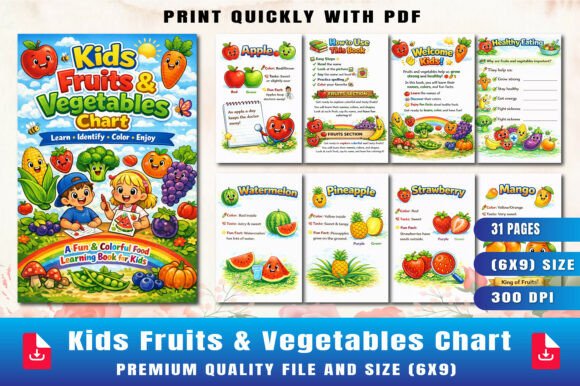
Introducing the Kids Fruits Vegetables Chart, a vibrant and educational tool designed to make learning about healthy foods fun and engaging for young children. This 31-page eBook is tailored for preschoolers and early learners, offering a colorful and interactive way to explore the world of fruits and vegetables. Whether you're an educator, parent, or content creator, this resource provides a structured yet playful approach to teaching kids essential food knowledge.
What Is the Kids Fruits Vegetables Chart?
The Kids Fruits Vegetables Chart is more than just a list of foods—it's an immersive learning experience that combines education with creativity. Each page features bright, cheerful headings, cute food icons, and clear visuals that help children recognize and remember different fruits and vegetables. With a clean white background, it's visually appealing and easy on the eyes, making it ideal for both digital and print use.
This chart includes two main sections: one dedicated to fruits and another to vegetables. The fruit section covers popular items like apples, bananas, mangoes, oranges, grapes, strawberries, pineapples, watermelons, papayas, and guavas. The vegetable section includes carrots, potatoes, tomatoes, cucumbers, spinach, cabbages, broccoli, cauliflowers, corn, and eggplants. Each entry is carefully chosen to reflect common produce found in most households and grocery stores.
Key Features and Benefits
The Kids Fruits Vegetables Chart stands out due to its thoughtful design and practical features. Here are some key elements that make it a valuable resource:
- Interactive Learning Pages: From matching activities to coloring pages, each section encourages active participation, helping kids retain information better.
- Writing Practice: Dedicated writing practice pages allow children to reinforce their learning by spelling out the names of fruits and vegetables.
- Healthy Eating Information: The chart also introduces basic concepts about nutrition, emphasizing the importance of including fruits and vegetables in daily meals.
- Final Review Page: A comprehensive review ensures that children have grasped the key points covered throughout the book.
With high-resolution JPG files and a print-ready PDF format, the Kids Fruits Vegetables Chart is perfect for educators who want to create printable materials, homeschooling parents looking for supplemental resources, or creators aiming to publish their own educational content.
Practical Applications Across Different Settings
The versatility of the Kids Fruits Vegetables Chart makes it suitable for various applications. In classrooms, teachers can use it as part of a lesson plan to introduce students to food groups and healthy eating habits. Homeschooling parents can incorporate it into their curriculum to provide a structured and engaging way to teach children about nutrition.
For content creators and publishers, this chart offers a ready-made resource that can be customized and used across multiple platforms. Its professional print quality (300 DPI) ensures that it looks great whether printed or viewed digitally. Additionally, its bright, colorful design helps capture attention and maintain interest among young learners.
Business owners and entrepreneurs in the educational or publishing industries can leverage this chart to develop products such as workbooks, flashcards, or even digital apps focused on early childhood education. It’s also a great asset for bloggers and influencers who want to share educational content with their audience in a visually appealing format.
Why Choose the Kids Fruits Vegetables Chart?
One of the biggest advantages of the Kids Fruits Vegetables Chart is its ability to simplify complex concepts into digestible, fun-filled lessons. By using simple language, bright colors, and relatable imagery, it makes learning accessible to children of all abilities. The inclusion of matching and coloring activities not only reinforces learning but also promotes fine motor skills and hand-eye coordination.
Another benefit is its adaptability. Educators can use it as a standalone teaching tool, while parents can supplement it with real-life experiences such as visiting a grocery store or growing plants at home. The chart serves as a bridge between theoretical knowledge and practical application, helping children understand why eating fruits and vegetables is important for their health.
Its professional-grade design and file formats make it easy to integrate into existing educational materials or repurpose for different uses. Whether you're preparing for classroom use, creating content for a blog, or launching a new product line, the Kids Fruits Vegetables Chart offers a solid foundation that can be built upon.
Considerations When Using the Kids Fruits Vegetables Chart
While the Kids Fruits Vegetables Chart is highly effective, there are a few considerations to keep in mind when selecting or implementing it. First, ensure that the content aligns with your specific educational goals. While the chart covers a wide range of fruits and vegetables, you may need to tailor it further depending on your target age group or cultural context.
Second, consider how you will present the material. Will you use it as a printed workbook, a digital download, or an interactive app? Each format has its own advantages and limitations, so choose the one that best suits your needs. Lastly, think about how to complement the chart with other resources—such as games, videos, or hands-on activities—to create a well-rounded learning experience.
In conclusion, the Kids Fruits Vegetables Chart is a versatile and valuable tool that can enhance the way children learn about healthy foods. Whether used in a classroom, at home, or in creative projects, it offers a fun, engaging, and educational way to introduce young learners to the world of fruits and vegetables.