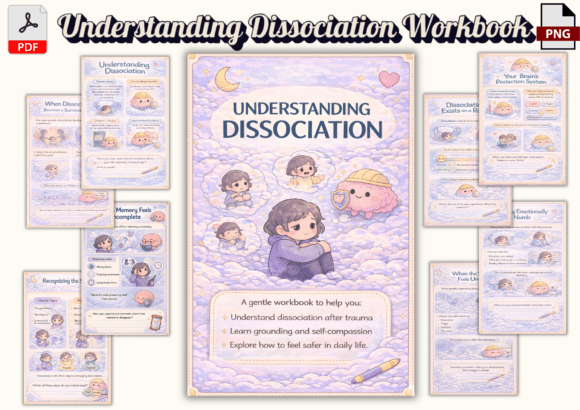
Understanding Dissociation Workbook: A Gentle Guide for Healing and Learning
The Understanding Dissociation Workbook is a 21-page digital resource designed to help individuals explore the concept of dissociation in a compassionate, educational, and reflective manner. This workbook combines clear explanations with guided reflection exercises, making it accessible for beginners while offering depth for those on a healing journey. Its soft, calming design and trauma-informed approach make it a valuable tool for anyone seeking to understand their experiences with dissociation.
If you're interested in learning more about dissociation, this workbook can serve as a helpful starting point. It provides an overview of what dissociation is, why the brain may use it as a protective mechanism, and how it can manifest in various ways. The content is structured to support both education and emotional reflection, helping users build awareness and develop grounding techniques.
There are several reasons someone might be drawn to this workbook. For individuals who have experienced trauma or are navigating mental health challenges, it offers a gentle introduction to the topic without clinical jargon. It’s also useful for those looking to enhance their self-awareness, practice mindfulness, or support their therapeutic work through journaling. The workbook’s features—such as its easy-to-read format, visual design, and compatibility with digital note-taking apps—make it practical for a variety of users.
One of the main benefits of this workbook is its ability to provide clarity on a complex subject. By breaking down dissociation into simple terms, it helps readers understand their own experiences in a non-judgmental way. The inclusion of reflection prompts encourages deeper thinking about personal patterns and emotions, which can be especially beneficial when used alongside therapy or other healing practices.
However, there are also considerations to keep in mind. While the workbook is well-suited for personal growth and basic education, it may not replace professional guidance from a therapist or mental health provider. Those dealing with severe dissociative symptoms or complex trauma may need more specialized care. Additionally, the workbook is best suited for individuals who are comfortable with self-directed learning and can engage with reflective exercises independently.
This workbook is particularly effective for people who are on a trauma healing journey, exploring mental health education, or using journaling as part of their self-reflection process. It can complement therapy sessions by reinforcing concepts discussed in counseling and providing a safe space for exploration. Its design also makes it a good fit for those who prefer visual learning or find traditional textbooks overwhelming.
On the other hand, individuals who require more intensive intervention, such as those experiencing frequent dissociative episodes or co-occurring mental health conditions, may benefit more from working with a licensed professional. In these cases, alternative resources like therapy, specialized books, or support groups could be more appropriate. It’s important to evaluate one’s specific needs and consider whether this workbook aligns with personal goals.
When deciding whether the Understanding Dissociation Workbook is right for you, consider your current level of understanding about dissociation and your comfort with self-guided learning. If you're looking for a gentle, educational guide that supports awareness and emotional safety, this workbook can be a valuable addition to your healing toolkit. However, if you need more personalized support or are dealing with complex issues, it's worth exploring additional options.
Ultimately, the decision to use this workbook depends on your individual needs and preferences. Whether you're just beginning to learn about dissociation or seeking tools to deepen your self-awareness, this resource offers a thoughtful and accessible approach to understanding and healing.