Emotional Regulation Toolkit: A Practical Companion for Real-Life Challenges
We have all been there. You are sitting in a meeting, and a single comment from a colleague sends your heart racing. Suddenly, the room feels too hot, your thoughts spiral into worst-case scenarios, and you feel an overwhelming urge to snap or shut down completely. Or perhaps it is late at night after the house has gone quiet, and you are lying awake replaying a conversation from three days ago, feeling a knot of anxiety tighten in your chest. These moments are not signs of weakness; they are human experiences where our emotional systems get overwhelmed.
This is where the Emotional Regulation Toolkit steps in as more than just another workbook. It is designed to be a hands-on companion that helps adults navigate the complex landscape of feelings without judgment. Instead of getting lost in abstract theories about psychology, this resource focuses on actionable strategies that can be applied immediately in the chaos of daily life. Whether you are dealing with workplace stress, relationship friction, or personal burnout, having a structured approach to understanding and managing your emotions can make all the difference between reacting impulsively and responding with intention.
Navigating the Storms of Daily Life
The true value of the Emotional Regulation Toolkit lies in its ability to translate complex psychological concepts into simple, usable tools. Imagine you are a project manager facing a sudden deadline change. Your initial reaction might be panic or frustration. This toolkit guides you through identifying that physical sensation in your body—the tightness in your shoulders or the quickened heartbeat—and labeling it accurately. By moving from "I am angry" to "I am feeling frustrated because my timeline was disrupted," you create a small but crucial gap between the trigger and your response.
Consider a parent trying to manage their own stress while helping a child with homework. The pressure to be patient can sometimes backfire, leading to an outburst that leaves everyone feeling guilty. With the practical strategies found in this 30-page workbook, parents can learn grounding exercises and mindfulness techniques specifically tailored for high-pressure family moments. The content encourages users to pause, breathe, and utilize self-compassion rather than harsh self-criticism when things don't go perfectly.
For professionals in healthcare, education, or social work, emotional regulation is not just a personal skill but a professional necessity. These individuals often absorb the stress of others, leading to compassion fatigue. The toolkit provides specific sections on building resilience and creating emotional support networks, offering a blueprint for maintaining mental health while caring for others. It transforms the concept of "self-care" from a vague idea into a concrete set of actions, such as setting boundaries or engaging in specific reflection activities.
Who Benefits Most from This Resource?
While the need for emotional skills is universal, different people find different aspects of the Emotional Regulation Toolkit particularly useful based on their unique circumstances. For young adults entering the workforce, the focus on communication skills and understanding triggers can be transformative. Learning how to express needs clearly without aggression or passivity is a critical life skill that this workbook addresses head-on through case studies and real-life examples.
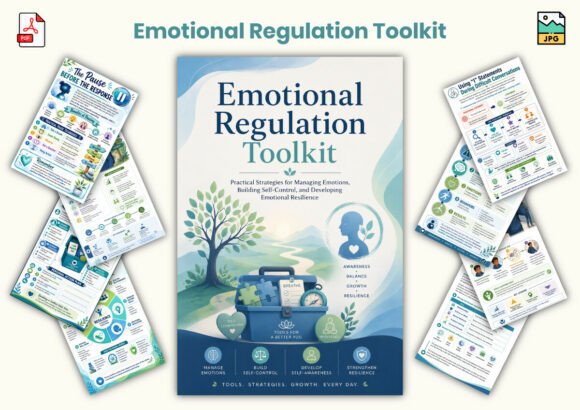
Individuals going through major life transitions—such as divorce, relocation, or career changes—often struggle with a sense of instability. The workbook's emphasis on positive thinking skills and emotional awareness helps anchor them during these turbulent times. The infographics and visual learning pages serve as quick reference points when the mind is foggy with uncertainty, offering a visual reminder of healthy coping mechanisms to return to.
Even those who consider themselves emotionally stable can benefit. We often assume we know ourselves well until a new stressor appears. The reflection activities within the toolkit act as a mirror, allowing users to identify blind spots in their behavior patterns. Perhaps you think you handle criticism well, but the action plans reveal a subtle tendency to withdraw. Recognizing these patterns early allows for proactive adjustment before they become entrenched habits.
Real-World Applications and Scenarios
The versatility of this resource makes it applicable across various industries and personal settings. In a corporate environment, teams can use the shared language of emotional regulation to improve collaboration. When team members understand each other's triggers and preferred communication styles, conflict resolution becomes smoother and more empathetic. The toolkit offers a framework for discussing difficult topics without escalating tension.
In educational settings, whether for adult learners or even integrated into parenting strategies, the tools provided help foster a culture of emotional intelligence. Teachers and mentors can use the worksheets to guide students in developing self-control and resilience. The clean layout ensures that the content is accessible and not intimidating, making it suitable for anyone looking to start their journey toward better emotional wellness.
Personal growth enthusiasts will appreciate the depth of the content. The workbook does not just stop at identifying problems; it moves forward to creating action plans. You might spend a week focusing solely on "Mindfulness Techniques," practicing the exercises daily until they become second nature. Then, you might shift your focus to "Self-Compassion," using the provided prompts to challenge negative self-talk. This modular approach allows users to tailor their experience to their current needs.
Practical Considerations Before You Begin
Before diving into the Emotional Regulation Toolkit, it is important to approach it with realistic expectations. While it is a powerful tool for personal development, it is not a substitute for professional therapy in cases of severe trauma or clinical mental health conditions. Think of it as a gym membership for your mind—a place to build strength and endurance, but one that works best alongside professional guidance when deep-seated issues arise.
Another consideration is consistency. The workbook contains 30 pages of valuable content, including PDF and JPG files ready for print or digital use. However, reading through it once is rarely enough. The most significant benefits come from revisiting the sections regularly, filling out the reflection pages honestly, and practicing the grounding exercises until they feel natural. The size of 6 × 9 inches makes it portable, encouraging you to carry it with you and use it in the moment when emotions run high.
Users should also be prepared for some discomfort. Exploring emotional triggers and past behaviors can bring up difficult feelings. The toolkit includes supportive structures like case studies and infographics to help process these emotions safely, but it requires a willingness to be vulnerable with oneself. The positive behavior support theme ensures that the tone remains encouraging, reminding you that setbacks are part of the process, not failures.
Why This Approach Works
The strength of the Emotional Regulation Toolkit is its balance of education and practice. Many resources offer theory without application, leaving readers feeling informed but unchanged. This workbook bridges that gap by providing immediate ways to apply what you learn. The inclusion of real-life example pages helps normalize struggles, showing that everyone faces similar challenges and that there are proven ways to navigate them.
The professional and clean layout design plays a significant role in the user experience. When you are already stressed, a cluttered or confusing document adds to the burden. The calming aesthetic of this resource reduces cognitive load, allowing you to focus on the content rather than deciphering the format. It creates a safe space for introspection, inviting you to slow down and engage with your inner world.
Ultimately, this toolkit is about empowerment. It shifts the narrative from being a victim of your emotions to being the captain of your ship. By equipping yourself with the right tools, you gain the confidence to face whatever comes your way with grace and stability. Whether you are seeking to improve your relationships, enhance your career performance, or simply find more peace in your daily routine, the strategies within this comprehensive workbook offer a clear path forward. Start your journey toward greater emotional wellness today by exploring the practical solutions waiting inside.